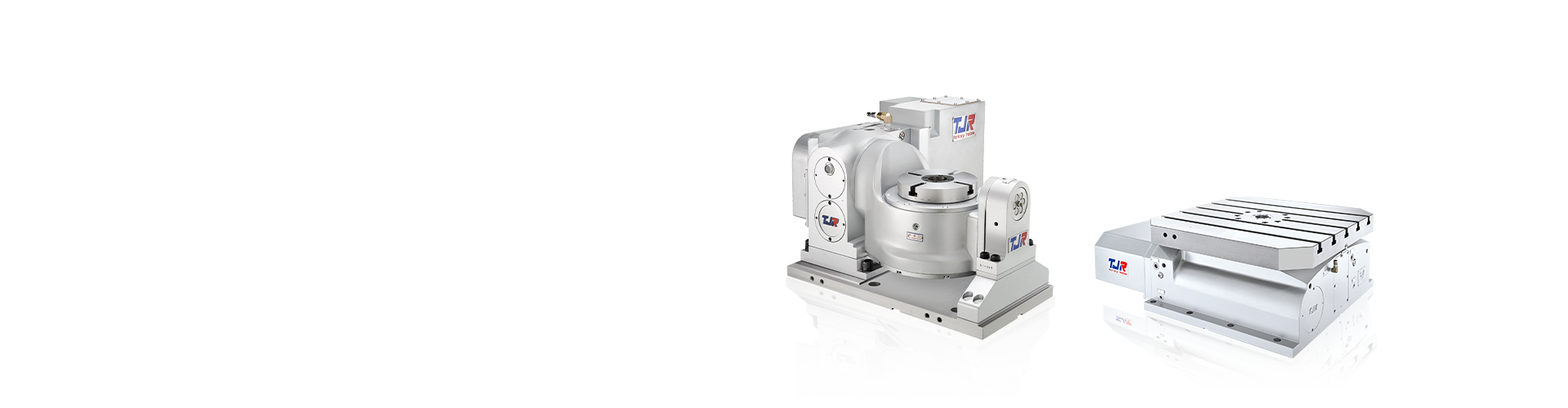
In high-precision CNC machining, the 4-axis rotary table is not just an accessory — it’s the cornerstone of complex and multi-surface operations. As industries such as aerospace, medical device manufacturing, and mold production continue to demand micron-level accuracy, the importance of the rotary table’s clamping mechanism becomes increasingly evident. Among various options, hydraulic clamping stands out for its superior strength, rigidity, and stability, all of which contribute directly to precision performance.
Hydraulic clamping systems use pressurized oil to generate strong and consistent clamping forces. Within a 4-axis rotary table, this mechanism locks the rotating platter in place when machining begins, preventing even the slightest movement that could compromise cutting accuracy. Unlike pneumatic systems, which rely on air pressure, hydraulic clamping ensures steady pressure and maintains a fixed position throughout the machining process, even under heavy torque and high cutting loads.
To achieve micron-level accuracy, every component of a machining system must work harmoniously — spindle, tool, fixture, and rotary table. If any part yields to vibration or micro-shifts, dimensional errors can occur. Hydraulic clamping addresses this by applying a high and uniform holding torque, eliminating micro-deflection during the machining process. This results in stable tool paths, smooth surface finishes, and minimized cumulative errors across multi-axis movements.
Furthermore, the repeatability of hydraulic systems allows consistent performance over thousands of cycles. The sealed oil pressure system minimizes environmental influence such as temperature fluctuations or humidity, which can affect air-based systems. As a result, hydraulic clamping maintains uniform clamping characteristics that are essential for long-term reliability and repeatable precision.
While pneumatic clamping is faster and cleaner, it cannot match the holding torque and stiffness offered by hydraulics. The following table highlights the technical differences:
| Feature | Pneumatic Brake | Hydraulic Brake |
|---|---|---|
| Clamping Force | Moderate | High and Consistent |
| Pressure Stability | Affected by air fluctuations | Stable under heavy load |
| Rigidity | Medium | Excellent |
| Maintenance | Low, air-based | Requires oil management but long lifespan |
| Best Application | Light machining or rapid indexing | Heavy-duty cutting and precision positioning |
Hydraulic clamping systems are especially valuable in operations where precision cannot be compromised. In the aerospace sector, they ensure stability while machining turbine blades or engine housings. In mold and die manufacturing, hydraulic clamping helps maintain perfect symmetry during high-torque cavity finishing. In automotive applications, such as gear or brake disc machining, it ensures smooth and accurate indexing, directly improving part quality and consistency.
Manufacturers such as TJR have refined hydraulic rotary tables to balance both rigidity and user convenience. Modern designs feature compact hydraulic circuits, improved sealing technology, and energy-efficient actuation to reduce system complexity. These advances allow integration into high-speed machining centers without sacrificing clamping strength or increasing downtime.
Moreover, TJR’s hydraulic rotary tables are engineered with precision bearings, hardened and ground worm gears, and fully enclosed housings. This synergy between mechanical design and hydraulic control ensures smooth operation and micron-level repeatability — ideal for multi-axis machining environments where every fraction of a degree matters.
In today’s precision-driven manufacturing landscape, hydraulic clamping is not just a feature — it’s a necessity. It enables 4-axis rotary tables to deliver unmatched rigidity, consistent positioning, and repeatable accuracy across demanding machining operations. While pneumatic systems remain a great choice for speed and automation, hydraulic clamping remains the gold standard for applications where performance, stability, and micron-level precision are non-negotiable.
Contact TJR today to explore our advanced 4th-axis rotary tables and experience how our hydraulic clamping technology can redefine your machining accuracy and reliability.